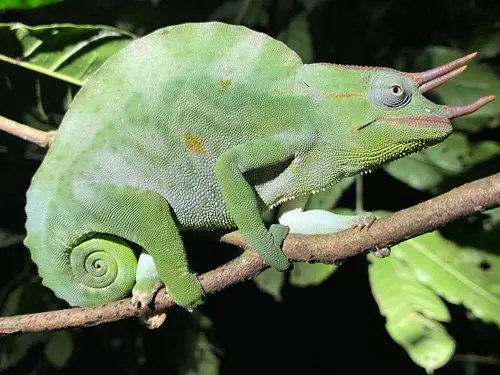
 LC© dmblokz · iNaturalist · CC BY-NC
Usambara three-horned chameleon
Trioceros deremensisA large, forest-dwelling chameleon; males carry three prominent horns. The flagship reptile of the reserve and of these mountains.
Around 100 bird species are recorded for Nilo, along with the Usambara three-horned chameleon and the Angolan black-and-white colobus. For most other East Usambara endemics, presence in the reserve has not been confirmed in recent years.
The East Usambara Mountains hold an unusual number of species found nowhere else. For the Nilo Nature Forest Reserve itself, the records we rely on are these: around 100 bird species, the Usambara three-horned chameleon (Trioceros deremensis) and the Angolan black-and-white colobus (Colobus angolensis).
The species shown below are East Usambara species. Some are documented for Nilo, others are known from Amani and neighbouring forests and are likely but not confirmed at Nilo. We mark the difference rather than hide it, because it is exactly the kind of gap a placement student can close.
Confirmed for Nilo: c. 100 bird species, Usambara three-horned chameleon, Angolan black-and-white colobus.
To be confirmed: the East Usambara endemics below, marked "presence at Nilo unconfirmed". Presence and abundance at Nilo are open questions.
LC© dmblokz · iNaturalist · CC BY-NCA large, forest-dwelling chameleon; males carry three prominent horns. The flagship reptile of the reserve and of these mountains.
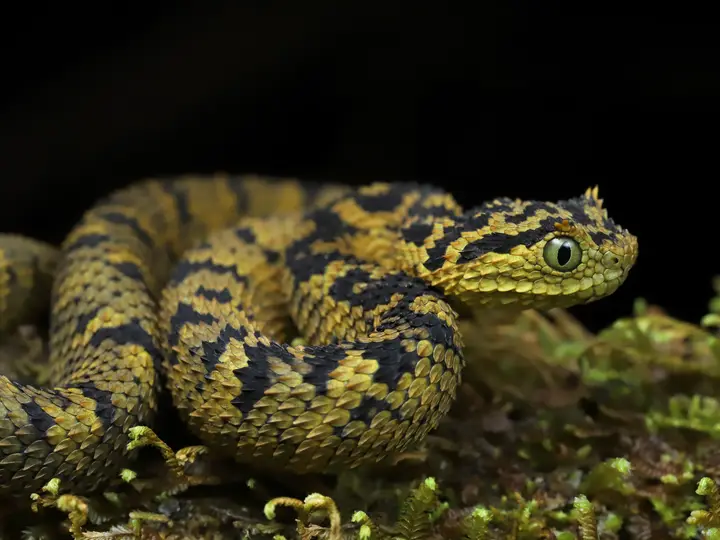 VU© Bobby Bok · iNaturalist · CC BY-NC
A small, arboreal viper with raised scales above the eyes, restricted to a few Tanzanian mountain forests.
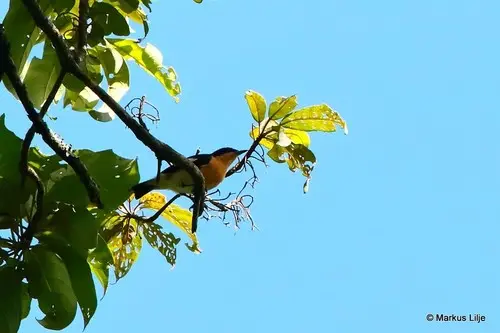 EN© markus lilje · iNaturalist · CC BY-NC-ND
One of Africa's rarest birds, confined to a few patches of East Usambara canopy.
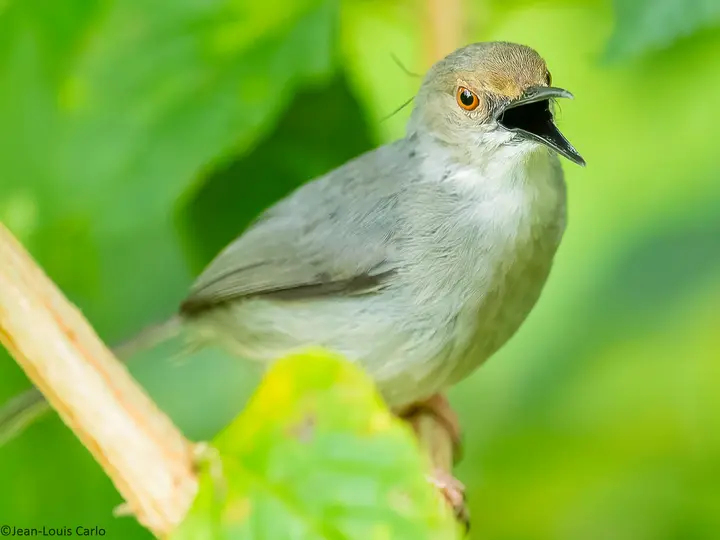 CR© Zein et Carlo · iNaturalist · CC BY-NC
A tiny, elusive bird with one of the smallest ranges of any African species. Critically endangered.
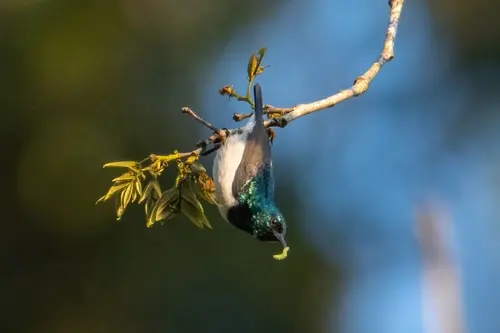 EN© Alex · iNaturalist · CC BY-NC
A canopy specialist of lowland and submontane forest.
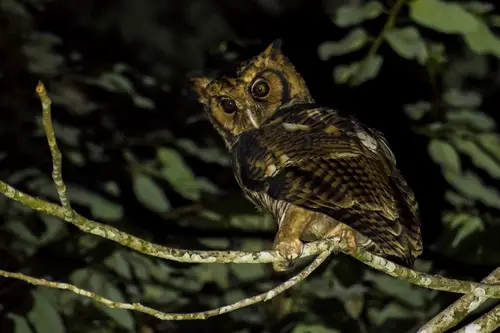 NE© Ewout Knoester · iNaturalist · CC BY-SA
A large forest owl of the Eastern Arc, seldom seen and poorly known. Its taxonomic status is under revision.
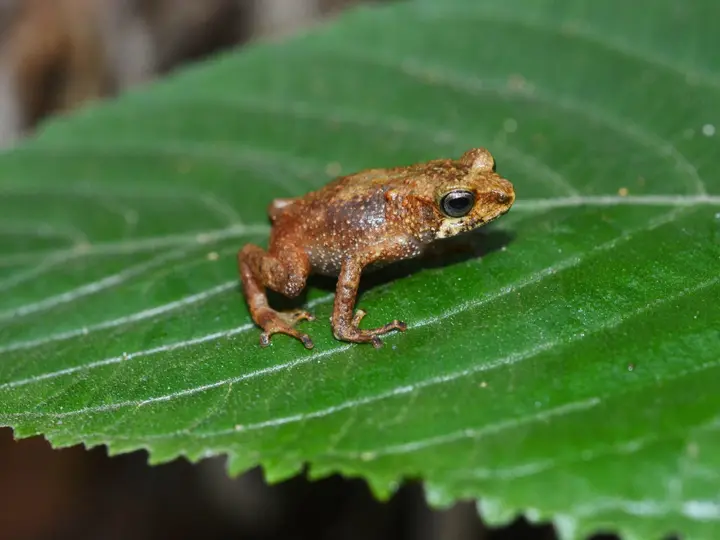 LC© John Lyakurwa · iNaturalist · CC BY
A small toad of the leaf litter that gives birth to fully formed young rather than laying eggs.
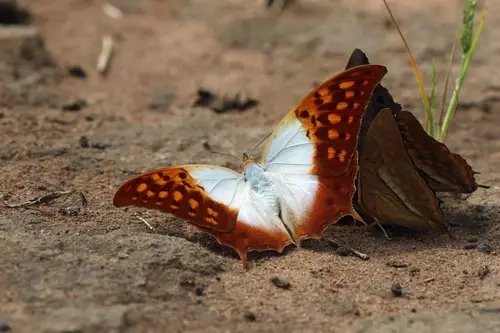 © Nigel Voaden · iNaturalist · CC BY
The Usambaras are a centre of butterfly diversity with many localised forms. No recent inventory exists for Nilo.
A leaf-eating monkey of the canopy, living in groups. Recorded for Nilo; group sizes and ranging near the boundary are undocumented.
Three to six months at the reserve boundary, own project, data for your thesis. Start possible now, rolling intake.